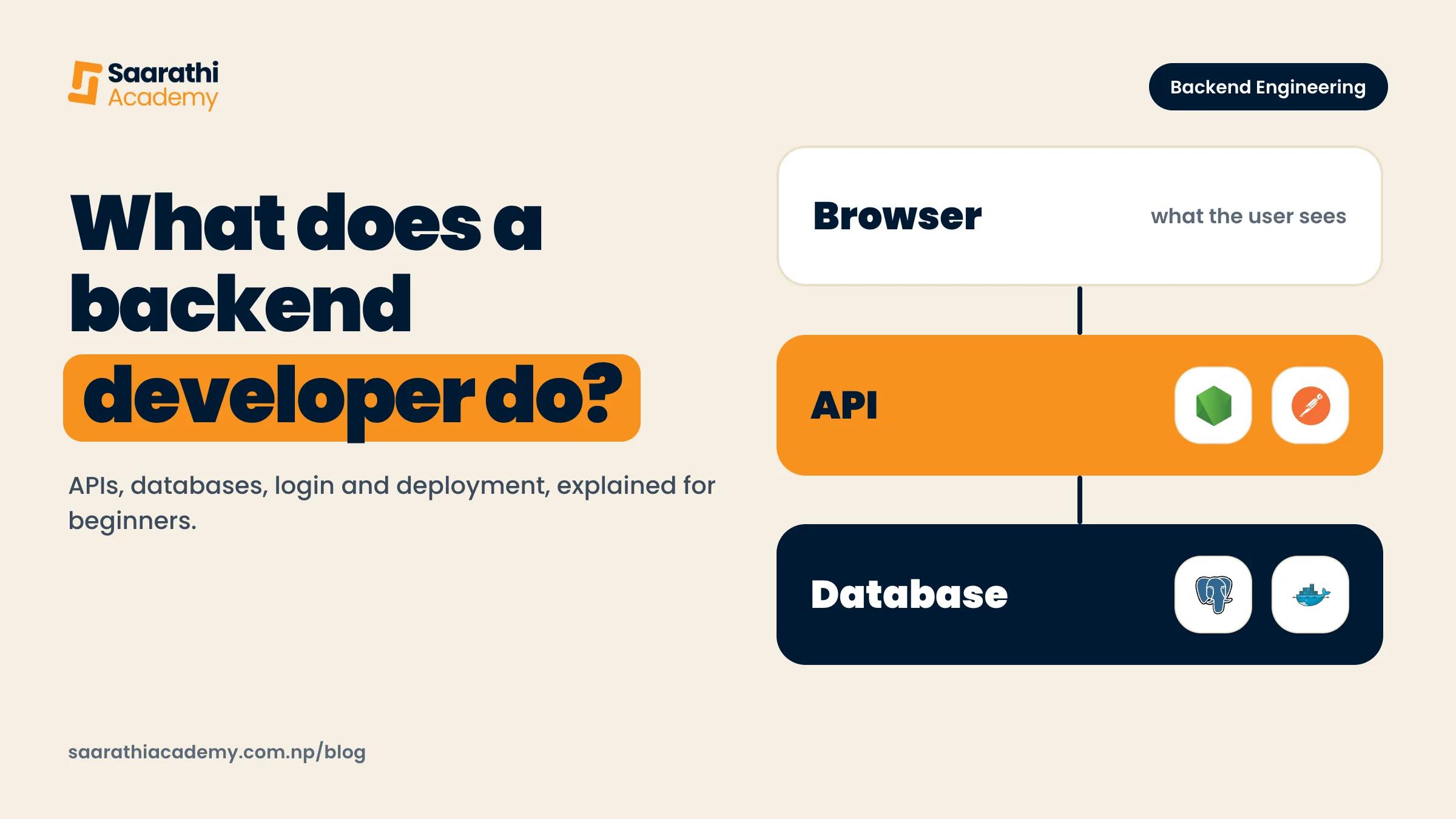
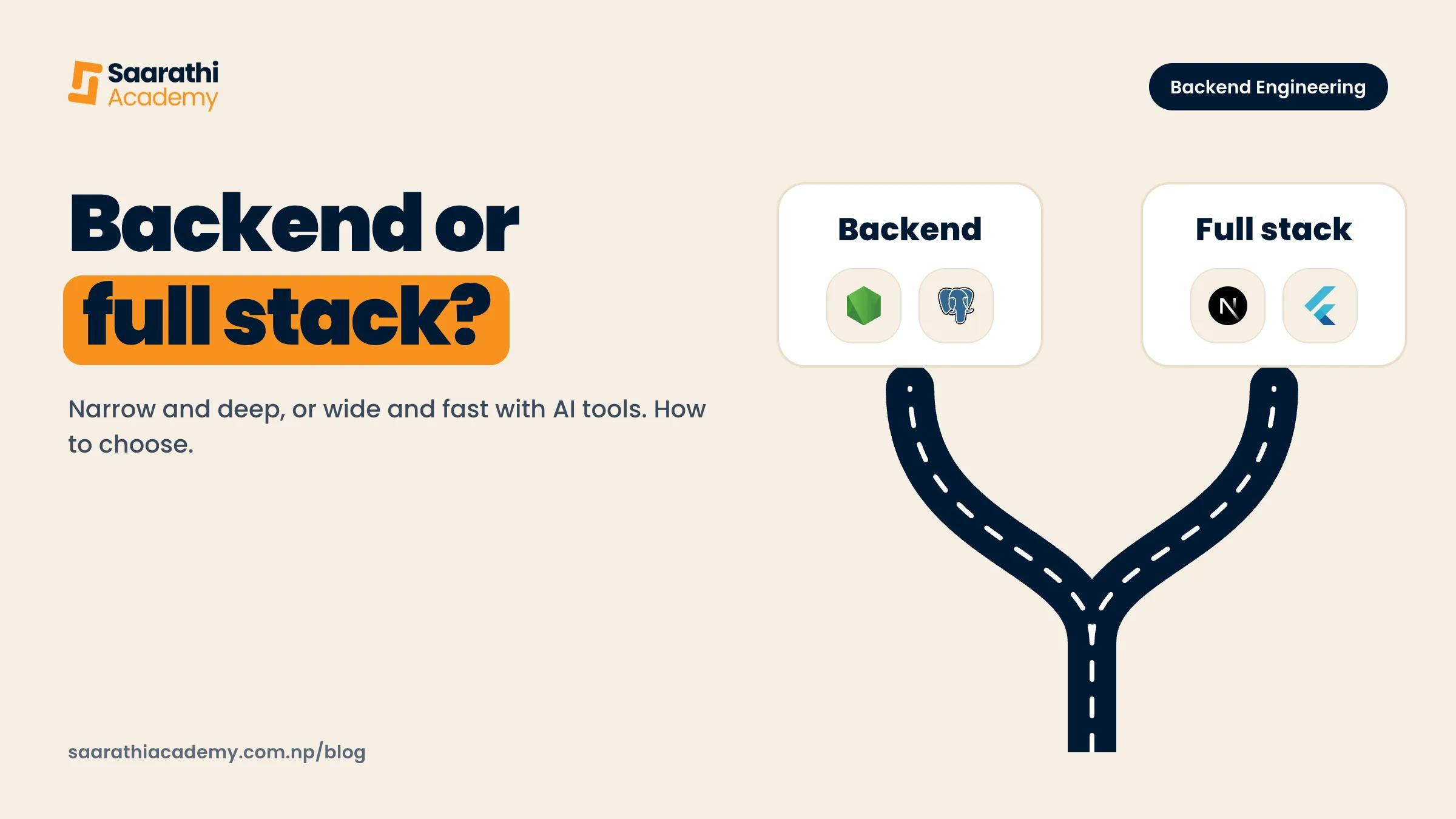
Both courses teach you to build software that runs on a real server, and both start from zero. They take very different routes. Backend Engineering goes deep on the part users never see: servers, databases and APIs, written by hand. Full Stack Development with Vibe Coding covers the whole app, front to back, and you build it by directing AI coding tools and checking what they write.
The two courses side by side
| Backend Engineering | Full Stack with Vibe Coding | |
|---|---|---|
| Length | 10 weeks | 6 weeks |
| Starting point | No coding needed. JavaScript and TypeScript are taught from scratch. | No coding needed. You start from zero. |
| Main tools | Node.js, Express, NestJS, Prisma, PostgreSQL, Docker | Next.js, Supabase, PostgreSQL, Flutter, with Cursor, Claude Code, v0 and Lovable |
| How you write code | Mostly by hand, so you understand every line | You direct AI tools, then read, test and fix what they produce |
| What you build | A deployed backend capstone with an API, a database, login and Docker | Two shipped builds: a full stack web app and a Flutter mobile app, live on a real domain |
The facts here come from the two course pages. If they ever disagree with this post, the course page is right.
What Backend Engineering teaches
The first four weeks are foundations: how a request travels across the internet, the Linux terminal, Git, and then JavaScript and TypeScript. After that you build REST APIs with Node.js and Express, learn how to structure them so they stay readable, and connect them to PostgreSQL. Two weeks go to NestJS and Prisma, which many companies use for larger backends. There is a week on system design, where you think about what happens when many people use your system at once. The course ends with a capstone you deploy.
If you want to know why an API is slow, why a login is unsafe, or how a database should be shaped, this is the course that answers those questions.
What Full Stack with Vibe Coding teaches
"Vibe coding" means describing what you want and letting an AI tool write the code. The course does use that, but it is not a copy-paste course. The first third covers how the internet, servers, databases and APIs work, so you can tell when the AI has written something wrong. Then you build a full stack web app in Next.js, which handles the screens and the server code in one project, with Supabase and PostgreSQL for data. You also build a Flutter mobile app. Both go live on a real domain.
You spend your time deciding what to build, giving the AI clear instructions, reading what it produced, and fixing it when it breaks.
How to choose
Pick Backend Engineering if you want to understand servers and databases properly, you like knowing exactly how your code works, and you are aiming at backend or API roles.
Pick Full Stack with Vibe Coding if you want to ship complete products quickly, you have an idea for an app or a business, or you want to see the whole picture from screen to database in a short time.
One way to think about it: the full stack course is wide and fast, the backend course is narrow and deep. Neither is the easy option. Fixing code an AI wrote takes real understanding, and so does writing it yourself.
Can I take one after the other?
Yes. Taking Full Stack with Vibe Coding first and Backend Engineering after works well if you build something and then want to understand the server side in more depth. The other order also works if you start with backend and later want to build complete apps faster with AI tools.
Still deciding?
Read the week-by-week syllabus on both course pages, or come to our classroom in Old Baneshwor and ask a trainer. Both courses run in small batches, with online seats as well.