The easiest way to learn digital marketing is in this order: first how customers find and choose a business, then SEO and content, then measurement, then paid ads on Meta and Google. Use AI tools at every step, but learn to check what they give you. Practise each skill on a real page or website, even a small one, and keep a record of what you did and what changed. That record becomes your portfolio.
Many beginners start with ads because ads look like the exciting part. That is usually a mistake. Ads cost money, and without the basics you cannot tell if an ad is working. The order below is cheaper and makes each step easier than the last.
The main skills in digital marketing
Digital marketing is a set of channels, each with its own skill. Here is what each one means in plain words.
| Skill | What it means | Costs money to practise? |
|---|---|---|
| Marketing basics | Who your customer is, what they need and the steps they take before buying | No |
| SEO | Search engine optimisation: getting a website found on Google without paying for each click | Only a domain and hosting if you build your own site |
| Social media and content | Posts, short videos and articles that people want to read or watch | No |
| Analytics | Measuring visits, clicks and enquiries so you know what worked | No |
| Meta ads | Paid ads on Facebook, Instagram and WhatsApp, shown to people by interest and location | Yes, a small budget |
| Google ads | Paid ads shown when people search on Google for something you sell | Yes, a small budget |
| AI tools | ChatGPT, Claude, Gemini, Canva AI and similar tools that help with research, writing and design | Free versions are enough to start |
Step 1: Learn how customers find and buy
Start with the marketing funnel. A funnel is the set of steps a person goes through: they first hear about a business, then get interested, compare options, buy, and maybe come back. Every channel you learn later fits somewhere in this funnel.
Next, learn to describe one customer clearly. Pick a real business, such as a cafe in your area or a relative's shop. Write down who buys, why they buy, and what stops them. Talk to two or three real customers if you can. This sounds simple, but it shapes every post, article and ad you make later.
Also learn a little marketing maths. You only need a few terms at first:
- Click-through rate: how many people clicked out of everyone who saw something.
- Conversion rate: how many visitors did what you wanted, such as sending a message or filling a form.
- Cost per lead: how much you spent for each enquiry.
These three numbers let you judge any channel, free or paid.
Step 2: Learn SEO and content
SEO comes next because it teaches you how search works and costs very little to practise. You learn how Google finds pages, what people type when they search, and how to write a page that answers that search well. A page that ranks can keep bringing visitors for a long time without paying for each click.
The basic SEO order is: understand how search works, research keywords, write pages around those keywords, fix the technical side of the site, then earn links and reviews. You can learn almost all of it with free tools. Our guide on how to learn SEO step by step with free tools lists the tools and the order.
Content goes hand in hand with SEO. Writing one clear, useful article teaches you more than reading ten guides. Write for a real reader, answer their question in the first paragraph, and use simple headings.
Search is changing with AI
Google now shows AI Overviews, short AI answers placed above some search results. People also ask ChatGPT, Gemini and Perplexity directly. The same basics still help here: a direct answer near the start of the page, clear headings and trustworthy information. Learn normal SEO first, then learn how these AI answers pick their sources.
Step 3: Learn social media and content for one platform
Do not try to post everywhere. Pick the one platform where your chosen customer spends time. In Nepal that is often Facebook, Instagram or TikTok, but check rather than guess.
Learn what kind of post works on that platform. Short video works differently from a long text post. Watch which posts get comments and messages, not just likes. Likes feel good but rarely tell you whether a post helped the business.
Keep a steady habit, such as three posts a week, for a month. Then look back at what got real responses and make more of that.
Step 4: Learn analytics before you spend money
Analytics is how you know what worked. Learn Google Analytics 4, which counts visits and actions on a website, and Google Search Console, which shows what people searched before they found your site. Both are free from Google.
Learn these before ads for one simple reason. If you cannot measure an enquiry, you cannot tell whether an ad paid for itself. Set up tracking first, then spend.
A useful habit is to tag every link you share with UTM tags. These are small labels added to the end of a link that tell Google Analytics where a visitor came from, such as a Facebook post or an email.
Step 5: Learn Meta ads
Meta ads run on Facebook, Instagram and WhatsApp. They find people based on their interests, age and location, even when those people are not searching for anything. That makes them good for new products and for building awareness.
Learn these parts in order:
- How a campaign is built: a campaign, the ad sets inside it, and the ads inside those.
- Choosing one goal per campaign, such as messages or website visits.
- Setting a small daily budget and a location.
- Making a few different ads with different hooks, the first line or first seconds that make someone stop scrolling.
- Tracking results with the Meta Pixel, a small piece of code that tells Meta when someone acts on your website.
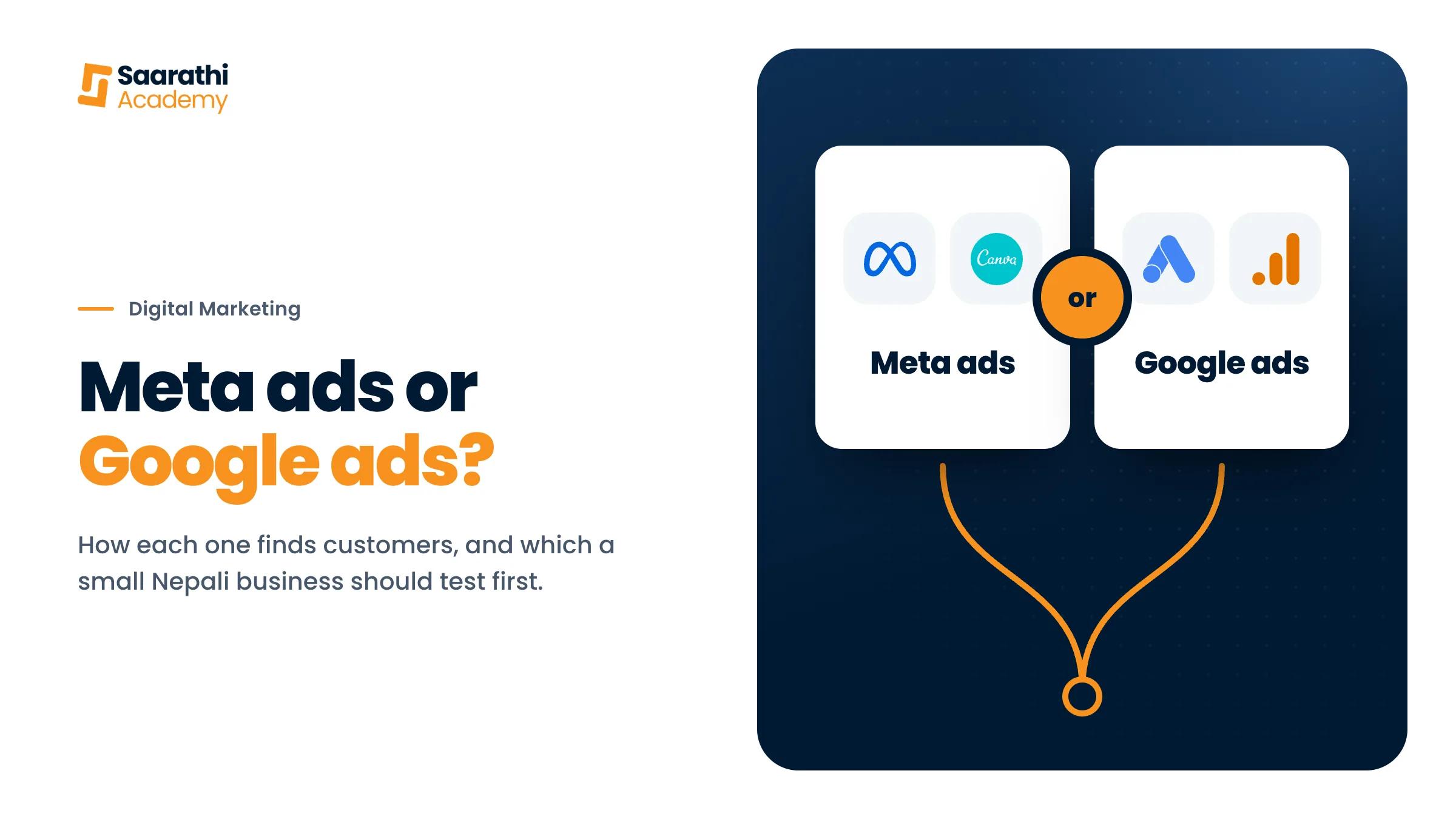
Start with a very small budget and a clear goal. One week of a tiny test teaches more than a month of reading. For a side-by-side look, read Meta ads or Google ads for a small business in Nepal.
Step 6: Learn Google ads
Google ads appear when someone searches for something. A person typing "cake delivery in Kathmandu" already wants a cake. That is the big difference from Meta: Google catches people who are already looking.
The skills you learned in SEO carry over here. Keyword research tells you what people search. You then learn match types, which control how closely a search must match your keyword, and negative keywords, which stop your ad showing for searches you do not want. Learn Search campaigns first. Leave Google's more automated campaign types until the basics feel easy.
Step 7: Use AI tools at every step
AI is not a separate stage. It is a helper you use from day one. Here is how beginners use it well:
- Research: ask Perplexity or ChatGPT what questions people ask about a product, then check the sources.
- Writing: let Claude or ChatGPT write a first draft, then rewrite it in your own words with real details.
- Design: use Canva AI to make a post or ad image quickly.
- Analysis: paste your numbers into an AI tool and ask what changed, then check the maths yourself.
The skill employers and clients look for is judgement. AI writes fast, but it can be wrong, generic or untrue. Your job is to spot that and fix it.
How to practise each skill
Reading is not practice. You need something real to work on. Good options are:
- A family business, a friend's shop or a local cafe that has a Facebook page but no plan.
- Your own small website on a topic you know, such as trekking routes, recipes or exam tips.
- A small social page about a hobby, built from zero.
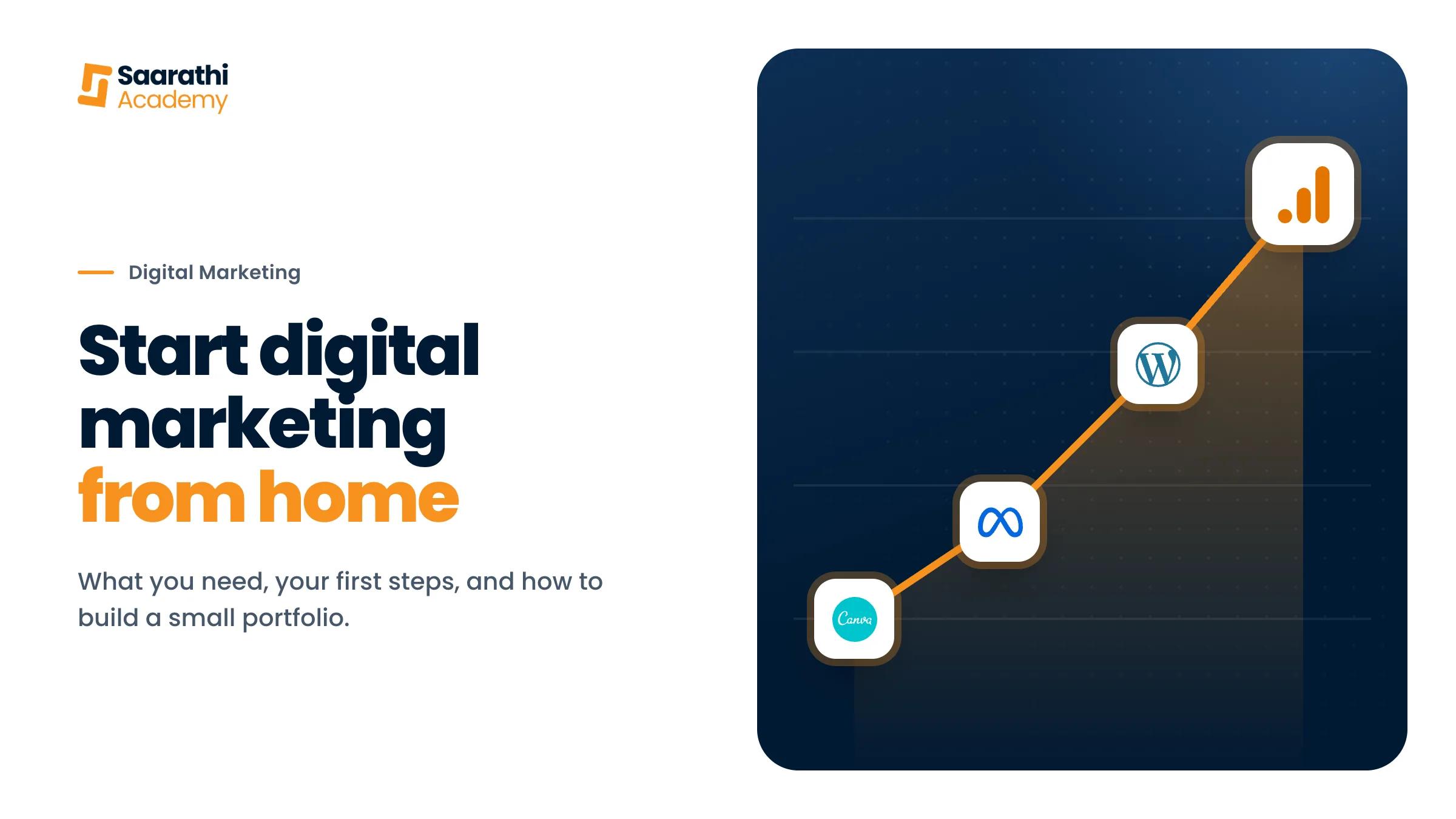
For each one, set one clear goal, such as more messages or more website visits. Change one thing at a time and write down what happened. If you want a step-by-step plan for doing this without leaving home, read how to start digital marketing from home in Nepal.
How to show your work
A certificate says you studied. A portfolio shows you can do the work. Keep it small and honest. For each project, write one page with:
- The business and the goal.
- What you did, step by step.
- The numbers before and after, even if they are small.
- What did not work and what you would change.
Put these pages on a simple website of your own. Building that site is itself proof that you can handle WordPress and SEO. Add a short LinkedIn post about each project so people can find it.
Small, real numbers are better than big claims. A shop page that went from five to twelve messages a week, with a clear explanation, is more convincing than a vague promise.
How long does it take?
It depends on how much time you give it each day. The order matters more than the speed. If you study alone, give each step a few weeks and finish one small project before moving on. If you want a mentor and a set plan, our Digital Marketing with AI course follows this same order over 8 weeks: marketing basics first, about 30 hours of SEO on a WordPress site you build yourself, then a week of Meta ads and a week of Google ads, with a live final project you report on in the last week.
Common mistakes to avoid
- Starting with paid ads before you can measure results.
- Trying every platform at once instead of one.
- Collecting certificates without building anything.
- Copying AI output without checking or rewriting it.
- Judging posts by likes instead of messages, visits or sales.
If you are still deciding whether this field suits you, read why digital marketing skills are in demand in Nepal. When you are ready to compare ways to learn, this guide on choosing a digital marketing course in Kathmandu lists what to check.