The digitization situation in Nepal is evolving rapidly. Each scroll, each swipe, and each click is becoming more and more dominated by a single form of video content. Videos have become the language of the contemporary internet; It can use them in YouTube vlogs and TikTok reels, corporate ads, and e-learning courses. And as the world's demand for video content is at an all-time high, the supply of professional, skilled video editors in Nepal is playing catch-up.
That gap? It's your opportunity.
Video editing training in Nepal can be the most effective investment you can make in your career at this point. The Media Industry in Nepal: Traditional to Digital-First.
Growing Nepal's Media Industry: From Traditional to Digital-First
Not long ago, Nepali media meant television, radio and print. Those channels still exist, but the attention has moved. YouTube, Instagram, Facebook and TikTok are where the audience is now, younger viewers especially, and businesses of every size have had to follow them there.
Look around, and the shift is impossible to ignore.
YouTube has grown into a powerful platform for Nepali creators, educators, journalists, and entertainers. Channels with hundreds of thousands of subscribers are no longer rare.
Short-form content on Instagram Reels and TikTok has created a new class of content creators who need consistent, high-quality edits to stay relevant.
Digital marketing agencies in Kathmandu and beyond are producing video campaigns for brands across every industry, from fintech to fashion to food delivery.
Startups and SMEs are realizing that a well-edited video does more in 60 seconds than a paragraph of text ever could.
The question businesses are asking is no longer Should we create a video? They all know the answer is yes. The question now is, how do we create better video faster? That consistent demand is what makes video editing a career in Nepal not just viable but genuinely exciting.
The Economics of Video Editing as a Skill
Let's talk numbers, because this is ultimately about building a sustainable career.
Income Streams Available to a Skilled Video Editor
Freelancing (International Clients)
Such platforms as Upwork, Fiverr, and LinkedIn can help Nepali editors find customers, as the hourly rates are much higher in the US, UK, Europe, and Australia. A good remote editor, based in Kathmandu, will be able to demand competitive rates in the global market and live at local rates. That is a solid monetary benefit.
Agency and In-House Roles
Digital marketing agencies, media houses, production companies, and corporate communication teams in Nepal are actively hiring trained video editors. These roles offer stability, creative growth, and a professional portfolio.
Content Creator Collaboration
The emerging population of YouTubers, podcasters, and social media influencers in Nepal constantly requires editors who get the platform they are creating on their behalf. Numerous prosperous creators outsource their editing completely.
Brand and Advertising Projects
Whether it is product launches, event recaps, or social media campaigns, brands require high-quality video content regularly and are willing to pay a lot to be satisfied with it.
Video editing is one of the few skills where your income is directly proportional to your ability, not your degree.
The Real Problem: Why Most Video Editing Learners Don't Succeed
Here's something no one wants to say out loud: most people who try to learn video editing in Nepal on their own never make it to a point where they can earn from it consistently. It's not because they lack talent. It's because of how they're learning.
The Common Self-Learning Trap
Thousands of aspiring editors in Nepal are stuck in the same cycle:
Watching random YouTube tutorials with no structured path
Learning tool features in isolation without understanding storytelling
Building no real projects because there's no accountability
Having no portfolio that can actually attract clients
Getting feedback from no one, so mistakes compound over time
The result? Someone who knows the software but cannot deliver value. And the market doesn't pay for software knowledge; it pays for outcomes.
What the Industry Actually Expects from a Video Editor in Nepal
If you're serious about a video editing career in Nepal, you need to understand what professional clients and employers are actually looking for. It goes far beyond cutting clips together.
What Professionals Expect
Storytelling & Audience Retention
Every video tells a story. Great editors understand narrative structure, pacing, and how to hold attention from the first second to the last.
Platform-Specific Editing
A YouTube documentary edit is completely different from a 15-second Instagram Reel, which is different again from a 60-second brand advertisement. Understanding these differences is non-negotiable.
Emotional Pacing & Visual Rhythm
The best editors know that editing is felt before it's seen. The rhythm of cuts, the use of silence, the placement of music, these are craft decisions that separate average work from outstanding work.
Sound Design & Color Grading
A video that looks and sounds polished immediately communicates professionalism. These are skills that clients notice, even if they can't always articulate why.
Fast Turnaround & Workflow Management
In a professional setting, deadlines are real, and revisions are common. Editors who can work efficiently under pressure are invaluable.
Understanding Client Briefs
Being able to translate a client's vision into an edited product, on time and on brief, is the core of professional video editing. This is exactly where the quality of your training determines whether you become a hobby editor or an employable professional.
What High-Quality Training Center Offers Video Editing Training in Kathmandu.
Before choosing any course or academy, it's worth knowing what genuinely good training looks like. Because not all programs are created equal.
The Five Pillars of Effective Video Editing Training
A Structured Learning Path
Training should take you from foundational concepts through to advanced techniques in a logical, progressive sequence. Random module-hopping doesn't build professional skills.
Project-Based Learning
Theory has its place, but editing is a hands-on skill. The best training programs have you working on real projects from day one, because that's the only way to develop professional instincts.
Portfolio Development
Your portfolio is your proof of skill. It's what gets you hired and what attracts freelance clients. A good training program builds your portfolio as part of the curriculum, not as an afterthought.
Mentorship and Feedback
Learning to edit without feedback is like learning to drive without ever being on a road. You need someone experienced to identify your blind spots, challenge your decisions, and push your craft forward.
Industry Simulation
Real-world editing involves deadlines, client revisions, and professional expectations. Training that simulates these conditions prepares you for actual work, not just theoretical competency.
Why Saarathi is the Growing Institute for Video Training in Nepal
Saarathi Academy is built around one principle: skills must translate into real-world results.
This philosophy shapes everything about how Saarathi's video editing course in Nepal is designed and delivered, from batch size to curriculum to post-training support.
What Makes Saarathi Different?
Small, Focused Batches
Saarathi keeps batches intentionally small. That means every student gets direct mentorship, personalized feedback, and a learning environment where no one gets lost in the crowd. You're not a face in a large classroom; you're a professional in development.
100% Practical Training Model
From day one, you're editing. There are no weeks of theory before you touch a timeline. The entire program is built around learning by doing, because that's what actually develops skill.
Real Project-Based Learning
The projects you work on at Saarathi aren't dummy assignments made up for the classroom. They're designed to reflect real industry scenarios, the kind of work you'll actually be doing professionally. Which means your portfolio reflects industry-level quality.
Career-Focused Support
Training doesn't end when the curriculum does. Saarathi provides mock interview preparation, portfolio guidance, and freelancing direction to help you make the transition from student to professional as smoothly as possible.
Continuous Practice Ecosystem
Saarathi's Sunday open classroom model allows students to practice and refine their skills beyond structured sessions, because consistent practice is what separates good editors from great ones.
What’s Inside Saarathi Video Editing Training Program
Here's a breakdown of what Saarathi's training actually covers:
Technical Skills
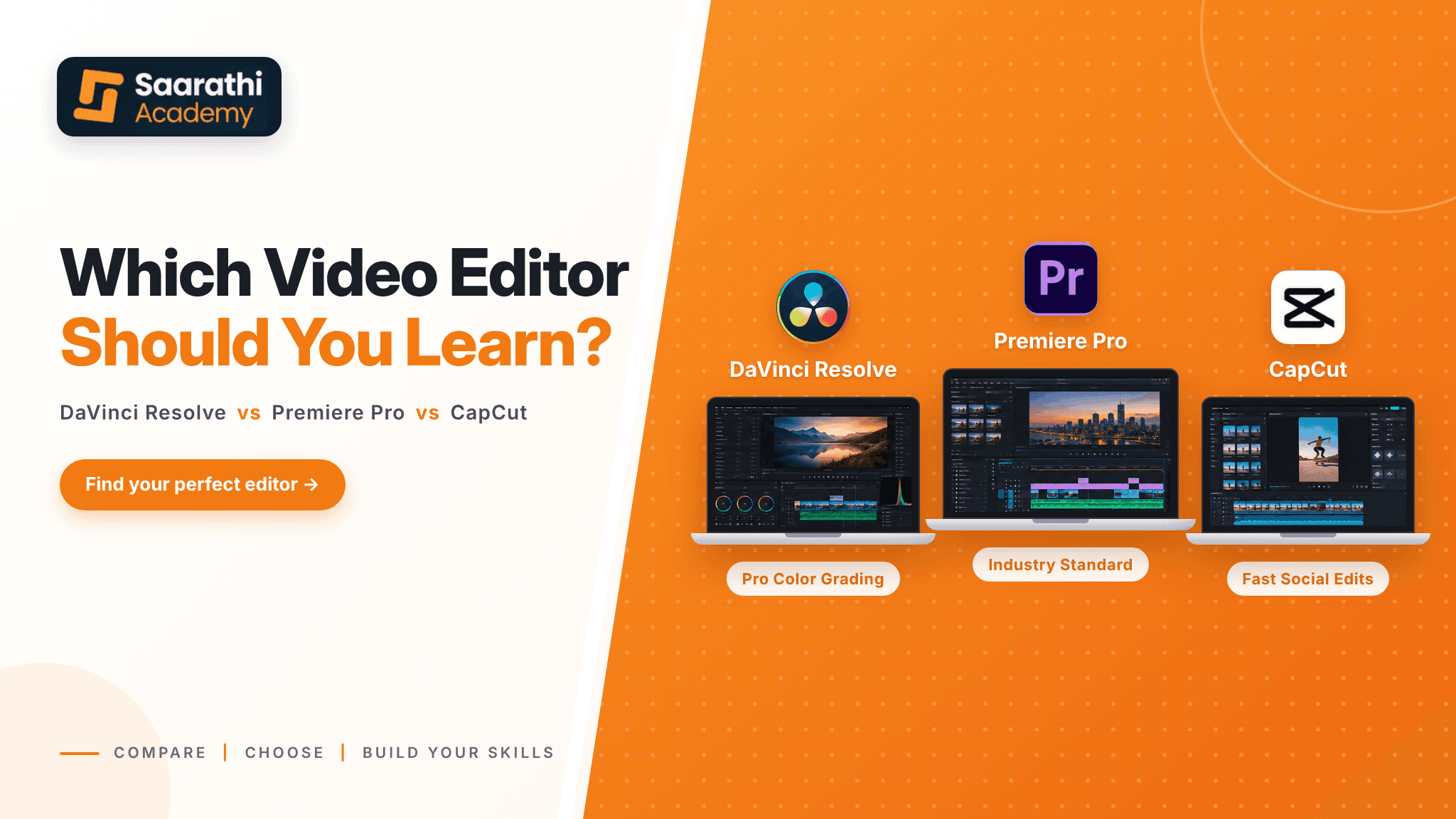
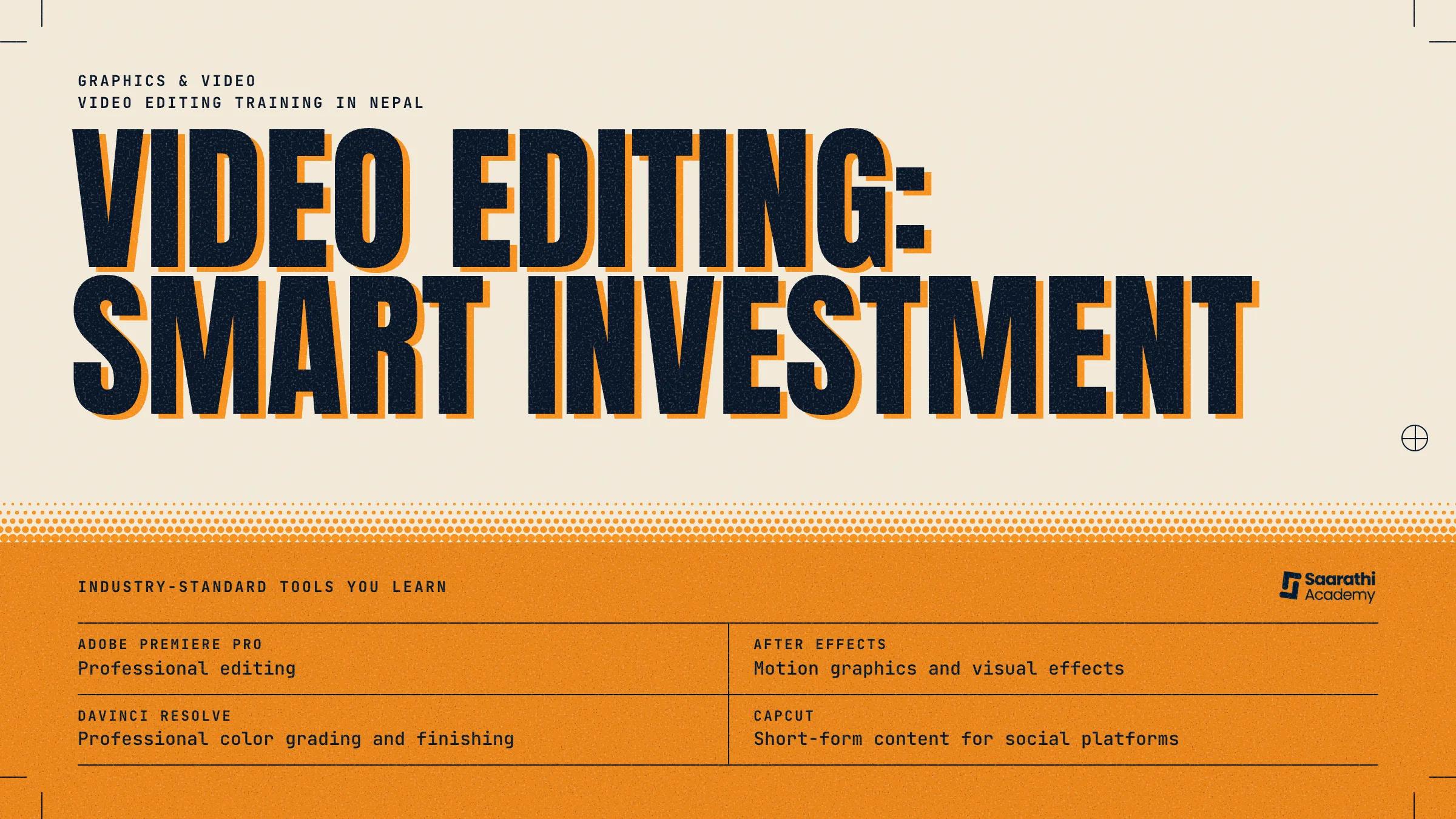
Adobe Premiere Pro: Industry-standard professional editing
After Effects: Motion graphics and visual effects
DaVinci Resolve: Professional color grading and finishing
CapCut: Short-form content optimization for social platforms
Creative Skills
Storytelling frameworks for different content types
Retention-focused editing techniques
Platform-specific editing styles (YouTube, Reels, Ads, Corporate)
Professional Skills
Client communication and brief interpretation
Workflow and project management
Delivery standards and revision etiquette
What You Leave With
A portfolio of real, industry-quality projects
A professional demo reel
The confidence and competence to start working immediately
If you want to know more about the syllabus and course details, explore Saarathi's Video Editing Course in Nepal.
Career Path After Video Editing Training in Nepal
One of the most powerful things about building a strong video editing skill set is the breadth of career directions it opens up.
Immediate Opportunities
Video Editor at a Digital Agency or Company: Full-time roles with creative teams and marketing departments
Freelance Video Editor: Work with international clients on your own terms
YouTube Editor: Partner with content creators to build and manage their channels
Social Media Content Editor: Handle video content strategy and production for brands
Motion Graphics Designer: Specializes in animated content for ads and digital campaigns
Your Growth Trajectory
The career path of a video editor has a clear and rewarding arc:
Junior Editor, Editor, Senior Editor, Creative Lead / Freelance Director. Each step brings greater creative responsibility, higher earnings, and more professional independence. The ceiling in this field is genuinely high, and it rises with your skill.
Timing Advantage: Why Starting Now Matters
This is not hype. The economics here are straightforward.
Nepal's digital media industry is growing. The number of brands, agencies, creators, and platforms producing video content is increasing every year. But the number of truly skilled, professionally trained video editors is not growing at the same pace.
That imbalance creates a window of opportunity. Early movers, people who develop strong skills now, will enter a market where demand already outstrips supply. They'll secure better opportunities, build stronger portfolios faster, and establish reputations while competition is still limited.
The best time to enter a growing industry is before it becomes saturated.
Who Should Consider Video Editing Training in Nepal as a Career?
This training is a strong fit for:
Students (after +2 or during bachelor's) looking for a practical, high-demand skill alongside or instead of traditional career paths
Freelancers who want to add a premium digital skill to their service offering
Content Creators: who want to bring their editing in-house and level up the quality of their own content
Career Switchers: ready to move into creative digital work from other fields
Marketing Professionals who want to understand video production and improve the quality of their brand content
If you're in any of these groups and you've been thinking about learning video editing, the moment to act is now.
Conclusion
Video is the dominant content format of our time. That's not a trend; it's a structural shift in how the world communicates, markets, educates, and entertains. And that shift is accelerating, not slowing.
In this environment, video editing is one of the most valuable skills you can develop. It's in demand across industries, it scales from local to global employment, and it rewards talent over credentials. Contact us for more details.