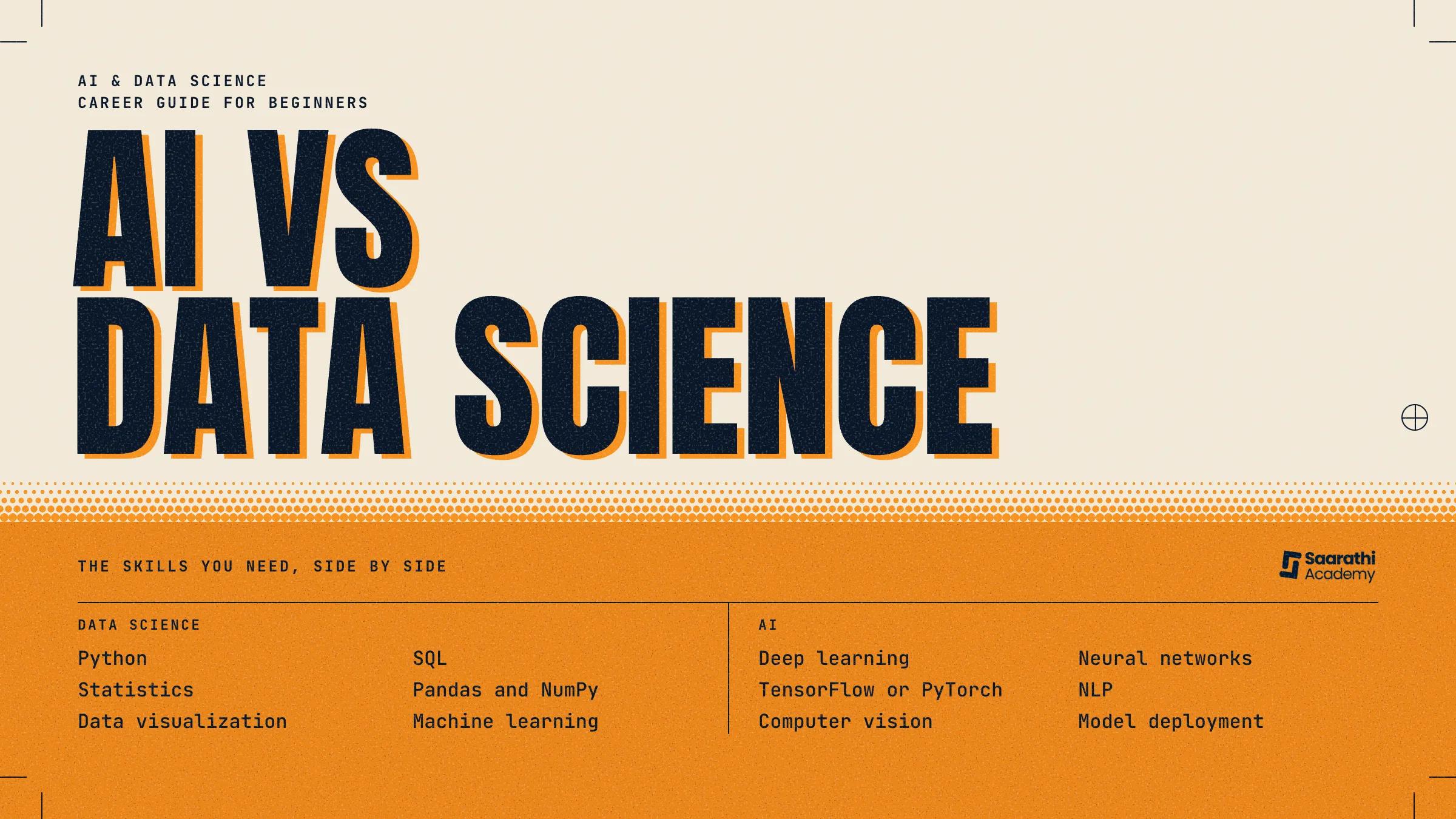
AI vs Data Science: A Complete Career Comparison for Beginners
Two careers. Similar tools. Different paths. AI and Data Science both look promising, but which one should you choose?
If this sounds like you, you're not indecisive. It is just picking between two jobs that use many of the same tools and technologies but are really quite different in what you're doing.
The key difference is that data science involves grasping the data, discovering patterns, and predicting them. The essence of AI is to leverage data and models to create systems that can learn, make decisions, and execute tasks on their own.
Imagine data science as the detective, and AI as the machine that the detective one day constructs to automatically arrest the bad guy.
In this guide, we will explain the daily life of each profession, what skills are required for every profession, how much salary you can expect to make in Nepal for each profession, and which one is better to start in the beginning. We also look at how solid data science training in Kathmandu can set you up for either direction. Here is what is coming up:
What each field actually does, in plain English
The skills you need for each, side by side
Where each career can realistically take you
What you can expect to earn in Nepal
Which path is the easier place to start
A simple way to decide, once and for all.
AI vs Data Science: What's the Real Difference?
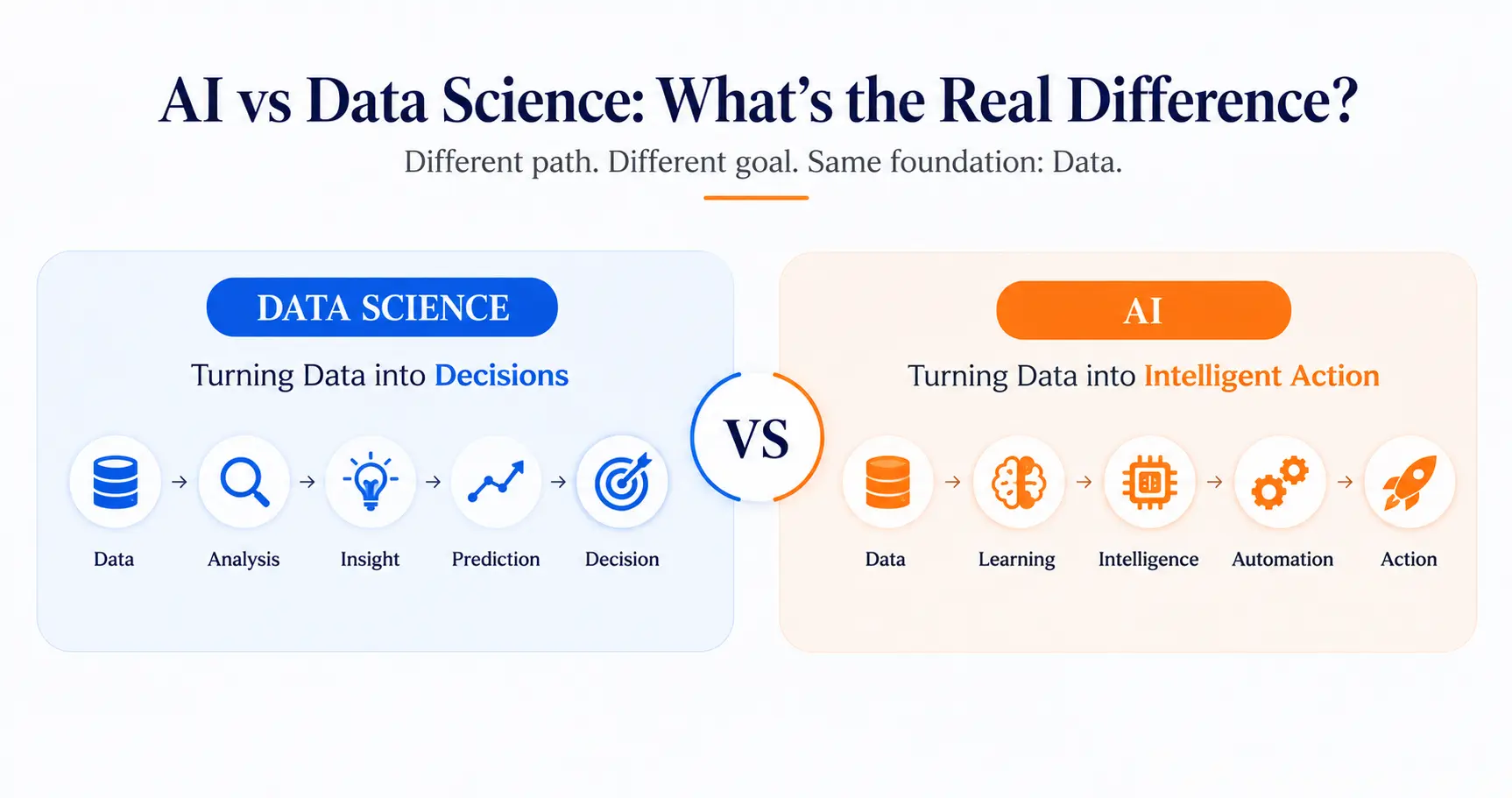
At first, AI and data science may look similar. Once you understand what each career does, the difference becomes easy to see.
Data Science: Turning Data Into Decisions
Data becomes analysis. Analysis becomes insight. Insight becomes prediction. Prediction becomes decision. A data scientist sifts through what has already occurred, finds the pattern within it, and communicates to the business what is likely to happen in the future in the language of the business.
AI: Turning Data Into Intelligent Action
Data becomes learning. Learning becomes intelligence. Intelligence becomes automation. Automation becomes action. An AI engineer is not just explaining what the data shows. At two in the morning, without logging in, they're building something that's a chatbot, or is a recommendation engine, or is a fraud filter that can respond to new data without human interaction.
Where AI and Data Science Meet
Neither field exists in isolation. Both lean on Python, machine learning, statistics, and clean, well-structured data. A strong data scientist can pick up AI concepts fast, and a strong AI engineer usually started out doing exactly the kind of analysis a data scientist does. The split is not about tools. It is about the finish line: insight for one, action for the other.
What Would You Actually Do in These Careers?
Job titles are abstract. A Tuesday afternoon is not. Here is the same problem, handled two different ways.
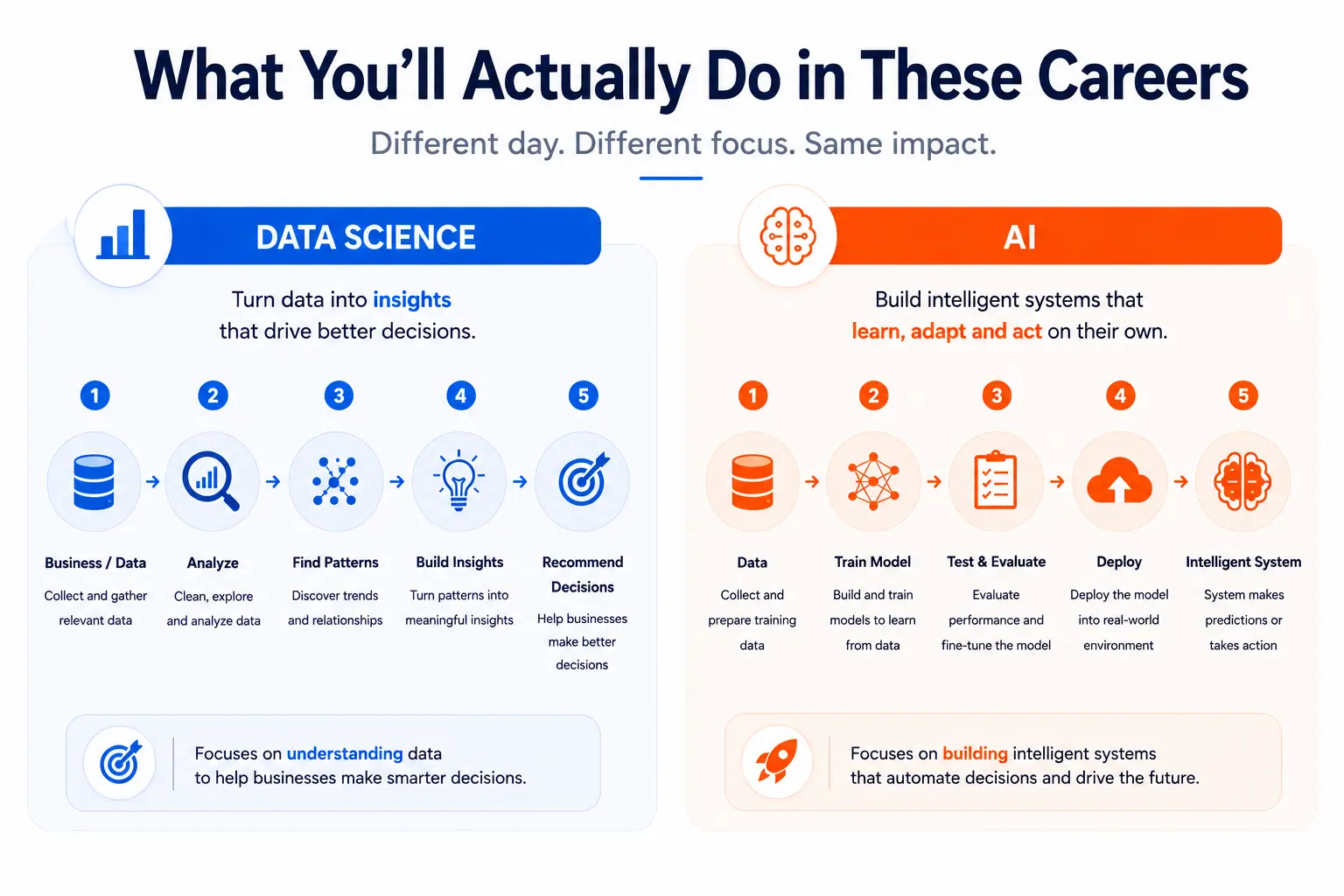
A Day in the Life of a Data Scientist
A Kathmandu-based online store notices a 15 percent dip in repeat purchases. A data scientist pulls three months of transaction data, cleans out the noise, tests two or three theories, and by Friday walks into a meeting with one clear answer: customers are dropping off after their second order because the delivery window is too unpredictable.
A Day in the Life of an AI Engineer
Present the problem to an AI engineer, and the work will be different. They work on the data, train the model, and flag at-risk customers as soon as their behavior begins to wane, test against actual orders, and embed the model into the company's application so that the discount code is triggered before the user walks out the door.
One role explains what is happening and what might happen next. The other builds the system that acts on it while you sleep.
AI vs Data Science: Which Skills Will You Need?
Skills You Need for Data Science
SQL
Statistics
Data Analysis
Pandas and NumPy
Data Visualization
Machine Learning
Communication
Skills You Need for AI
Python
Machine Learning
Deep Learning
Neural Networks
Mathematics
TensorFlow or PyTorch
Computer Vision
Model Deployment
The Skills They Have in Common
Identify some of the common elements in both lists. The common ground is a foundation of Python, mathematical concepts, and data handling and machine learning. But it’s true that students who are just starting should not be worrying about the label and should start building that foundation. Once you discover which side of the work it is that excites you, specialization occurs naturally.
AI vs Data Science: Which Career Has More Opportunities?
Where a Data Science Career Can Take You
The standard progression for someone who becomes a data analyst is junior data scientist, data scientist, and senior data scientist. On the way, you will meet jobs such as business analyst, ML analyst, data consultant, etc. that are seeking the same skill sets.
Where an AI Career Can Take You
ML engineer, AI engineer, senior AI engineer, and AI or ML lead are the sequence of the AI ladder. In the vicinity, job roles are NLP Engineer, Computer Vision Engineer, and Generative AI Engineer a few years back, unknown job titles but in great demand now on Nepali job boards.
AI vs. Data Science Salary: Which One Pays More?
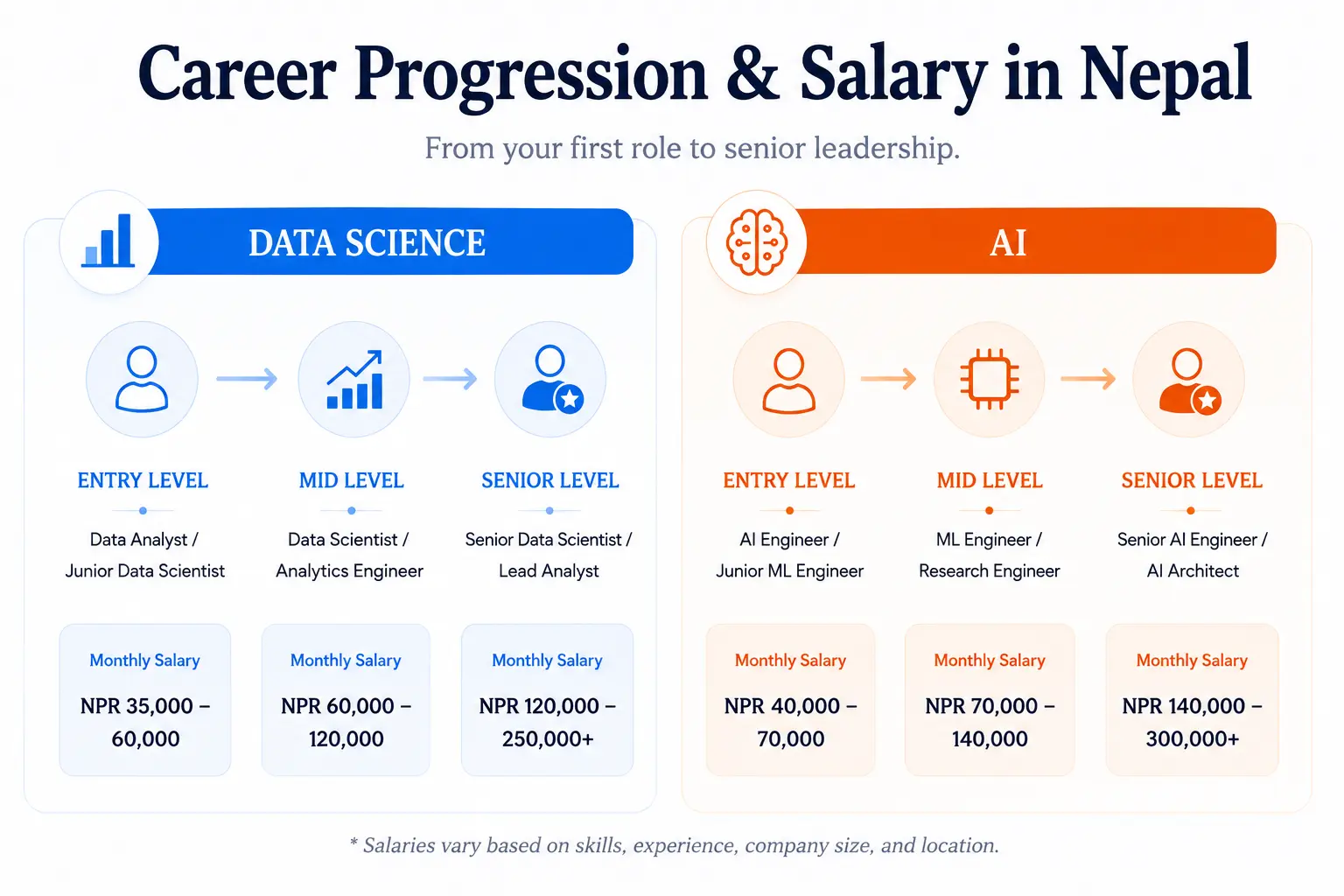
The truth, and what no one wants to hear, is that there is no universal winner. More of your payslip hinges on how many years of experience you have and the type of skills you possess, whether they are AI, data, or otherwise specialized.
Data Science Salary in Nepal
Entry-level data scientists in Nepal typically start around NPR 35,000 to 60,000 a month. With this goes the salary range of a data scientist, which varies from NPR 60,000 to NPR 120,000 for mid-level professionals and over NPR 150,000 for senior positions with solid portfolios, particularly in the fintech industry or remote work opportunities
AI Engineer Salary in Nepal
The curve for AI pay is the same – with the apparent exception of the top of the curve, which is steeper. The salary range for fresh AI engineers is NPR 30,000 to NPR 50,000 per month. Mid-level engineers earn roughly NPR 70,000 to 150,000, and senior specialists in deep learning or MLOps can comfortably clear NPR 200,000.
What Can Increase Your Earning Potential?
Certificates open the door. Projects get you through it. Employers in Nepal increasingly hire based on what you have actually built, not just what you finished.
Which Path Is Easier to Start With?
Data Science Could Be Right for You If:
You enjoy working with numbers
You like finding patterns others miss
You enjoy digging into analysis
You are pulled toward business problems
You like turning messy data into a clear story
AI Could Be Right for You If:
You enjoy programming for its own sake
You like building things that run on their own
You are drawn to machine learning specifically
You enjoy algorithms and how they think
You want to create intelligent applications, not just reports
Thinking About Data Science Training in Kathmandu?
Once the data science bit of the comparison becomes interesting, the next real question is what solid data science training in Kathmandu should actually deliver. Not a barrage of jargon, but actual steps that you will take: Python, statistics, SQL, data analysis, machine learning, and data visualization are taught around a set of actual projects, rather than slides you will forget by next week.
What Should You Look for in Data Science Training in Kathmandu?
Theory is no match for practical work. No matter where you enroll, make sure that they provide hands-on projects using “real” data, an updated curriculum, mentors who have dealt with real, messy data, a portfolio you can show in interviews, and real support at the conclusion of the courses.
Looking for Data Science Training in Nepal? Start With the Right Foundation
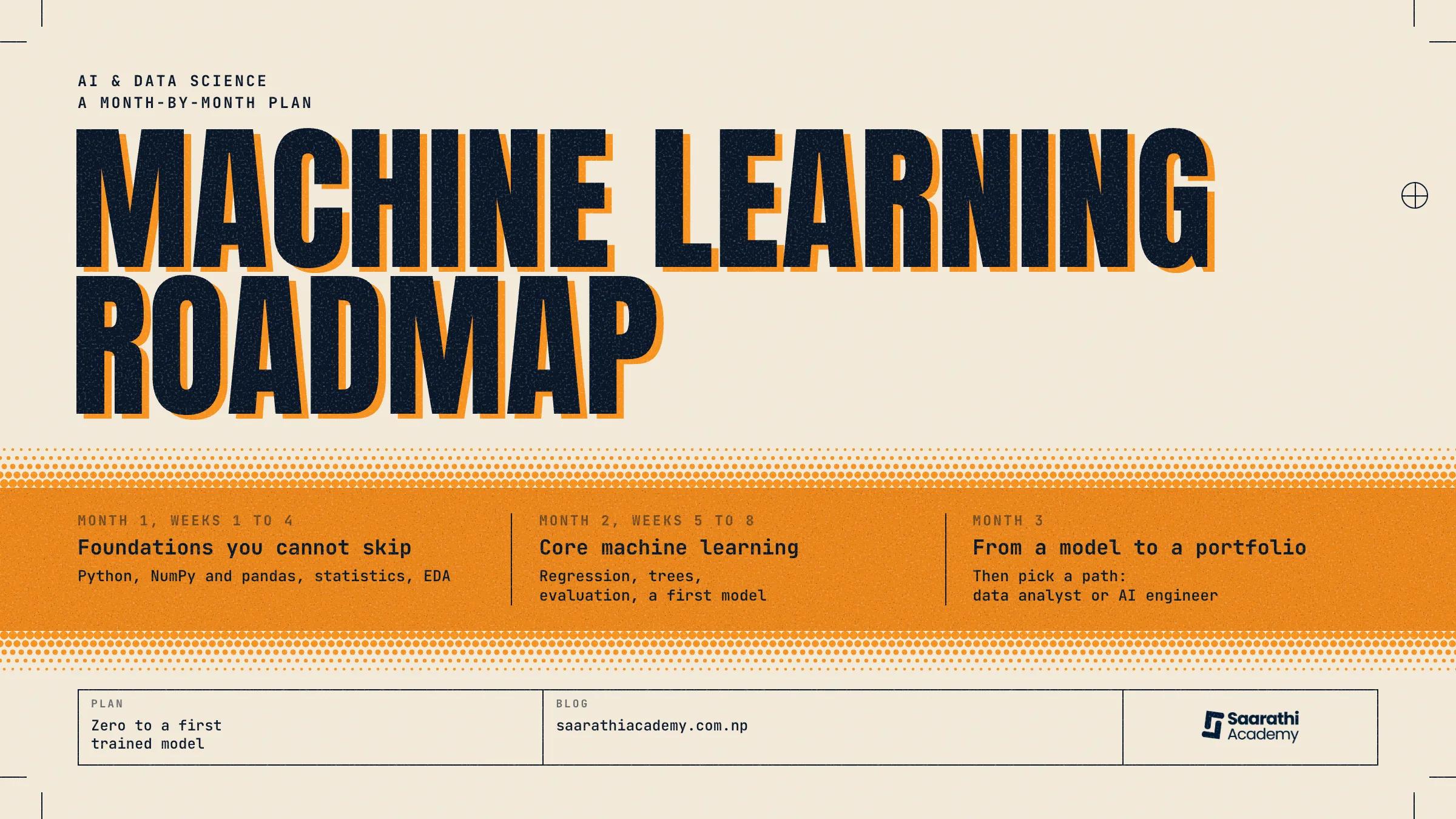
It's always the same starting sequence: Python, followed by Statistics and Data Analysis, followed by Machine Learning, followed by real projects, and eventually followed by specialization. Take one extra step, and you'll end up with cracks later, which are most likely to appear when you need your foundation the most.
Why Strong Foundations Matter
A solid grounding in data science does more than land you an analyst role. It quietly builds the runway you will need if you decide to specialize into AI later, since both fields take off from the same starting point
Choosing a Data Science Course in Nepal: What Should You Check?
Before you hand over any money, ask sharper questions than the brochure answers.
Does the Course Teach Practical Skills?
A syllabus that only lists topic headings tells you nothing. Look for named tools and libraries, not vague promises.
Will You Build Real Projects?
Ask to see a project from the last batch. Original work on real data says far more than a recycled tutorial dataset ever will.
Does It Include Mentorship and Career Support?
One-to-one feedback, a CV review, and interview practice should be built into the course, not sold to you as an upgrade afterward.
Is the Curriculum Updated?
Confirm the course reflects today's tools and today's hiring bar, not a syllabus that has not changed in three years.
Data Science Course in Kathmandu vs Learning AI From Scratch
Here is the part most beginners get wrong: you do not have to pick a permanent lane on day one. Starting with strong data science and machine learning fundamentals is not a detour before AI. It is the on-ramp. This is about sequencing, not a life sentence
Should You Choose AI or Data Science?
The right choice depends on the kind of work you enjoy and the problems you want to solve.
Data Science may be a better fit if you enjoy analyzing data, finding patterns, making predictions, and turning those findings into useful insights.
AI may be a better fit if you enjoy programming, building intelligent systems, automating tasks, and working with machine learning models.
There is no single career that is better for everyone. Both fields offer strong career opportunities, but they suit different interests and strengths.
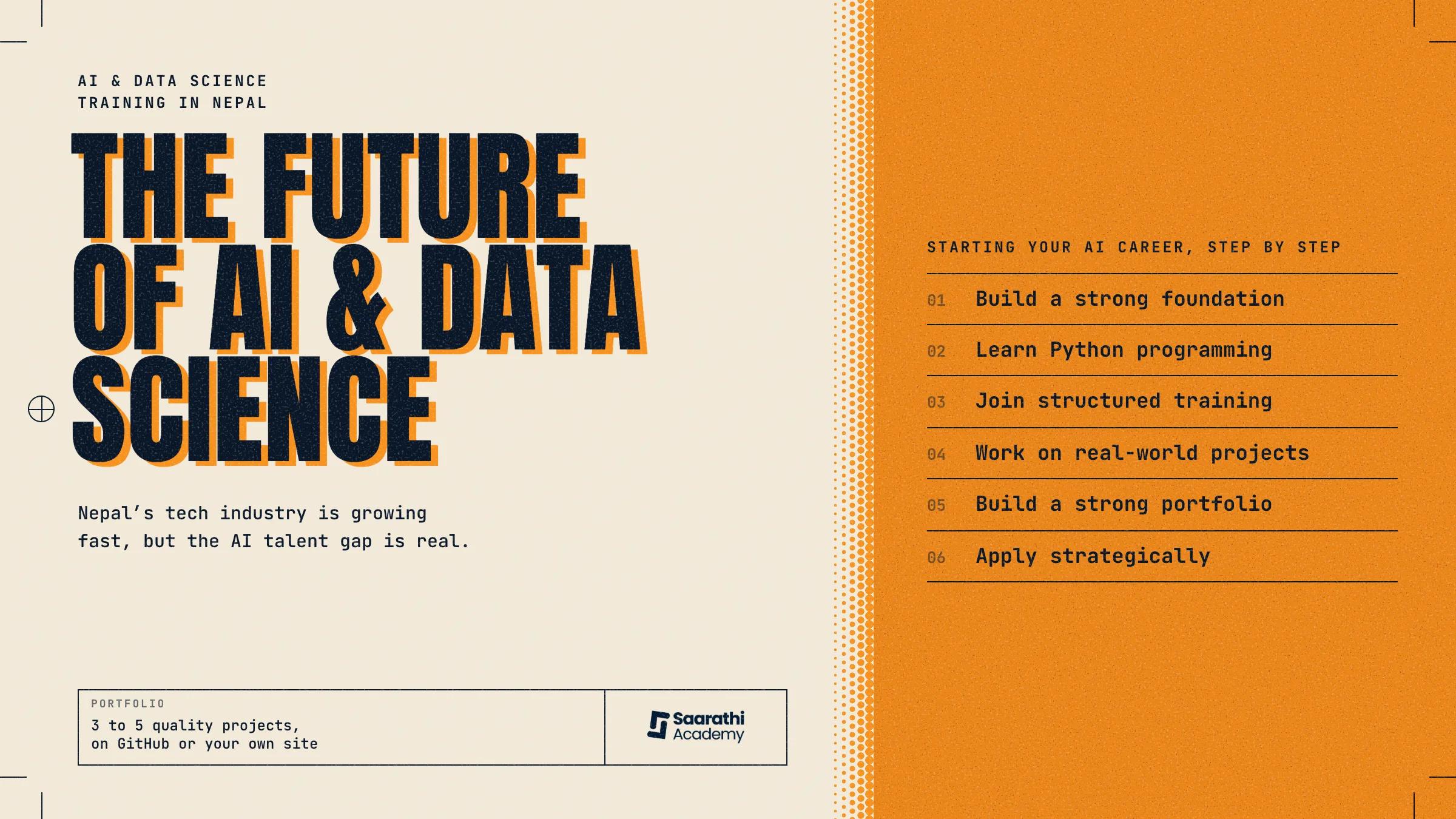
If you are completely new to the field, start with strong foundations in Python, statistics, data analysis, and machine learning. Once you understand the basics and gain some practical experience, you can choose the direction that interests you most.
Ready to Build Your Data Science Career?
Start with the right foundation. Explore the Saarathi Academy Data Science & Machine Learning Course in Nepal and develop practical skills through hands-on learning and real-world projects.