Data Science with Python: The Only Libraries You Actually Need to Start
If you're new to data science with Python and want to build a career in the field, choosing the right learning path is just as important as learning the right tools. Before diving into Python libraries, it's worth understanding how to choose the right Data Science training.
The bright side is that you don't have to spend your entire life learning all the Python libraries to get going. In fact, using a handful of basic libraries, you can clean data, visualize data, analyze data, and start using your first machine learning models.
Here, I will introduce you to the 7 libraries that every basic Python developer needs to know, what they are used for, and the order in which you should learn them. This roadmap can assist your learning journey, whether you're self-studying or thinking about pursuing a career in data science, to ensure you're learning the most relevant tools and getting started on your own with confidence.
Data Science: Why Python Is the Best Language for Data Science
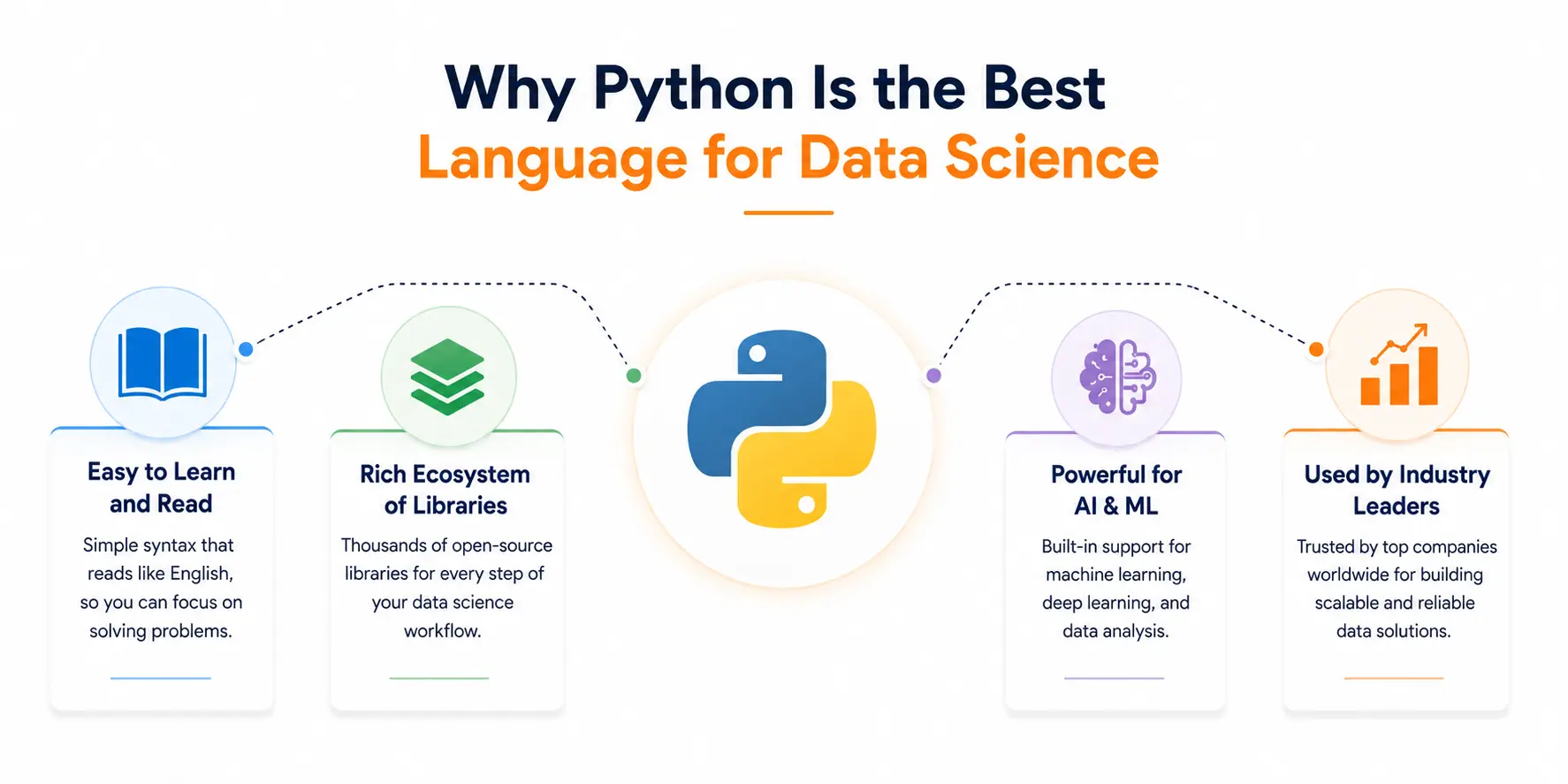
When starting your journey in data science with Python, one of the first questions is: Which programming language should you learn? While there are several choices, Python has become the industry standard thanks to its simplicity, versatility, and powerful ecosystem. Let's explore why it's the best language for beginners.
Easy to Learn and Read
Unlike common programming languages, Python actually is close to English. In Java, a 15-line task can be executed in three lines of code in Python. The difference is important if you're still gaining confidence in your ability, as you don't waste your effort on syntax; you spend effort solving problems.
A Rich Ecosystem of Libraries
Python's open-source nature is reflected in the size of its developer community, which has built a vast repository of libraries, thousands of which are developed and maintained globally. The thing is it's OK that you don't have to try all of it. These are the few libraries that will get you through just about any new project you can imagine.
Trusted by Industry Leaders
Whether it's a recommendation engine at Google, background operations at Microsoft, content recommendations at Netflix, or predictive models at NASA, Python is used in data-driven functions across all of them. It's the same language used by some of the world's most data-intensive companies, and it's the one you're learning.
The 7 Python Libraries Every Beginner Should Know
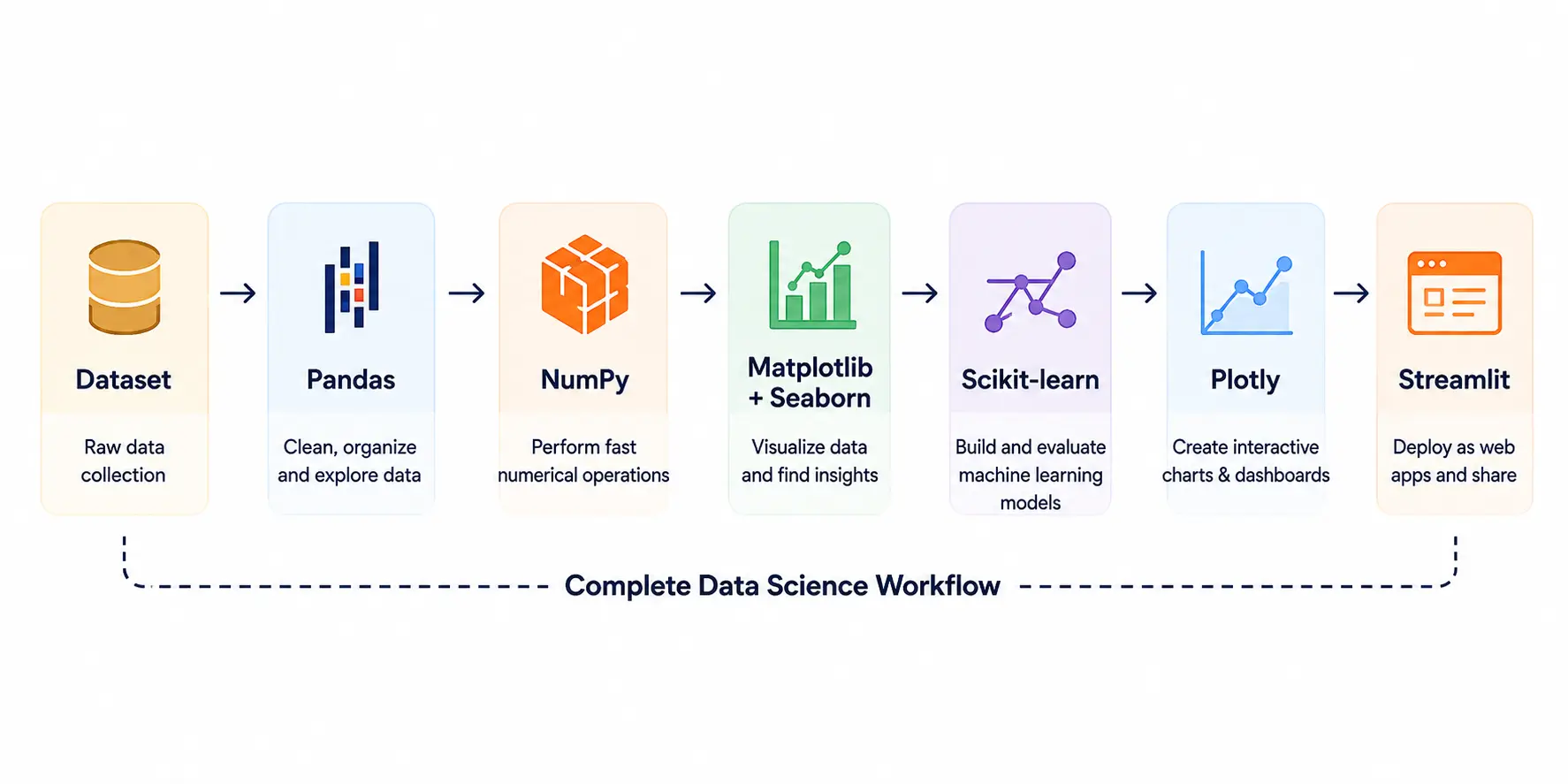
Every Python library has a specific role in the data science workflow. Together, they help you collect, clean, analyze, visualize, and deploy data-driven solutions. Here are the seven libraries every beginner should start with.
NumPy: Work with Numbers Efficiently
Best for: Numerical computing and mathematical operations
Performs fast calculations on large datasets.
Works with arrays and matrices efficiently.
Forms the foundation for many other Python libraries.
Ideal for data manipulation and scientific computing.
Pandas: Clean and Analyze Data
Best for: Data cleaning and analysis
Import data from CSV, Excel, or databases.
Handle missing values and organize datasets.
Filter, sort, and analyze data with ease.
A must-have library for almost every data science project.
Matplotlib: Create Simple Visualizations
Best for: Basic data visualization
Create line, bar, pie, and scatter charts.
Turn raw numbers into easy-to-understand visuals.
Identify patterns and trends quickly.
Widely used for reporting and data analysis.
Seaborn: Make Better Charts
Best for: Statistical data visualization
Create attractive and well-presented charts.
Produces easier visualizations with less code.
Excellent for making comparisons between data and findings.
It has been developed on top of Matplotlib to provide improved visualization.
Scikit-learn: Build Machine Learning Models
Best for: Machine learning
Fit regression and classification models.
Create data needed for machine learning activities.
Test models using built-in testing facilities.
It's ideal for anyone just starting their AI and predictive analysis journey.
Plotly: Create Interactive Dashboards
Best for: Interactive data visualization
Create, refresh, and control interactive charts and dashboards.
Implement zooming, hover, and filtering.
Perfect for business reports and presentations.
Ideal for presenting your portfolio.
Streamlit: Turn Projects into Web Apps
Best for: Deploying data science projects
Convert Python scripts into web applications.
Share projects without web development knowledge.
Create interactive tools with minimal code.
Perfect for building an impressive data science portfolio.
You do not need forty tools to start doing real data science. You need seven, used well, and a project to prove it.
Which Library Should You Learn First?
Rather than jumping between random tutorials, it helps to follow a straightforward order. Each step below builds directly on the one before it.
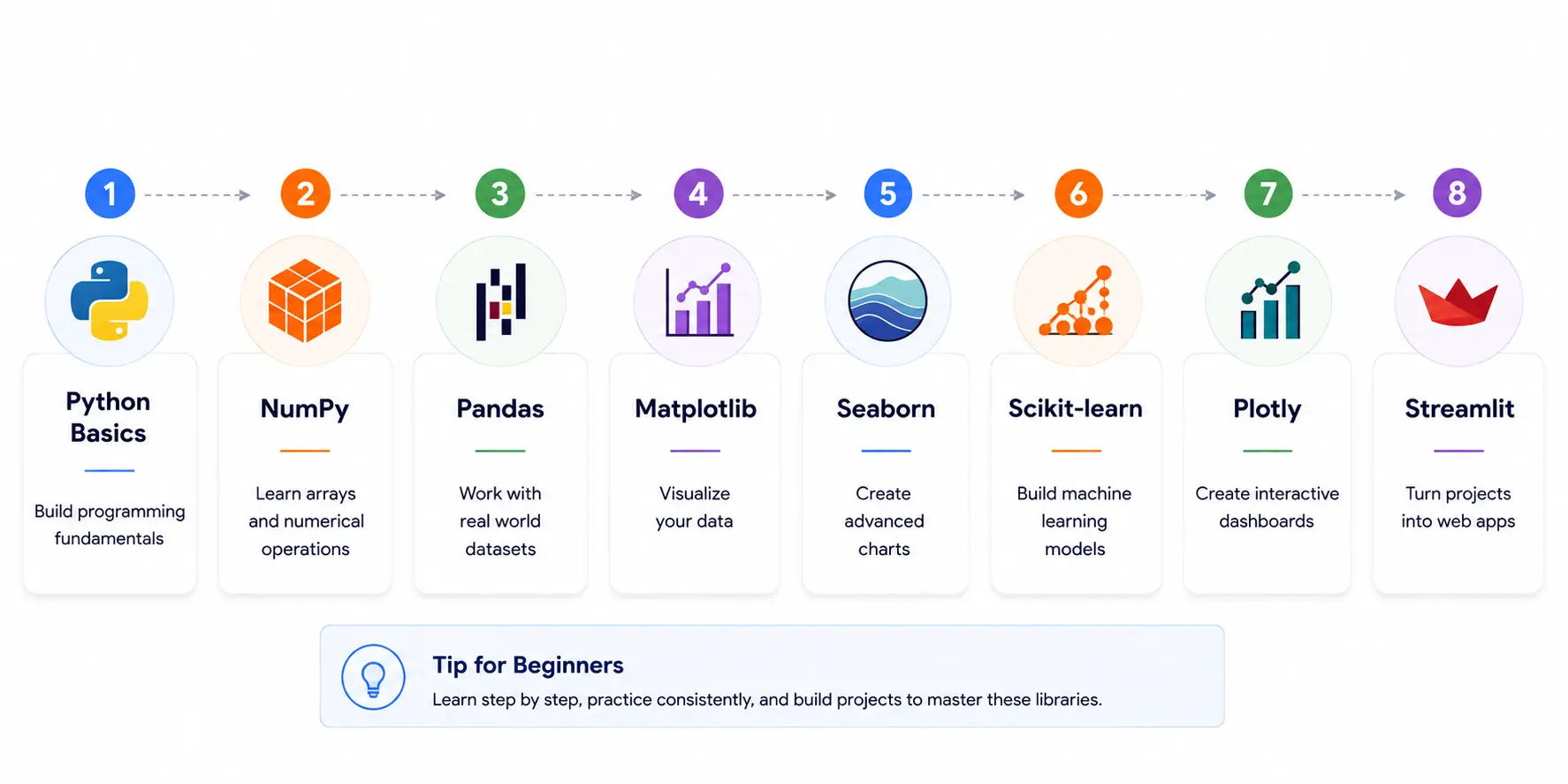
Step | Learn | Why It Matters |
1 | Python Basics | Build programming fundamentals |
2 | Learn arrays and numerical operations | |
3 | Work with real-world datasets | |
4 | Matplotlib | Visualize your data |
5 | Seaborn | Create advanced charts |
6 | Scikit-learn | Build machine learning models |
7 | Plotly and Streamlit | Create dashboards and deploy projects |
A Beginner Project Using These Libraries
It's important to learn how these libraries all work together by building a small project that uses them all through, instead of separately, so as to better understand how they work together.
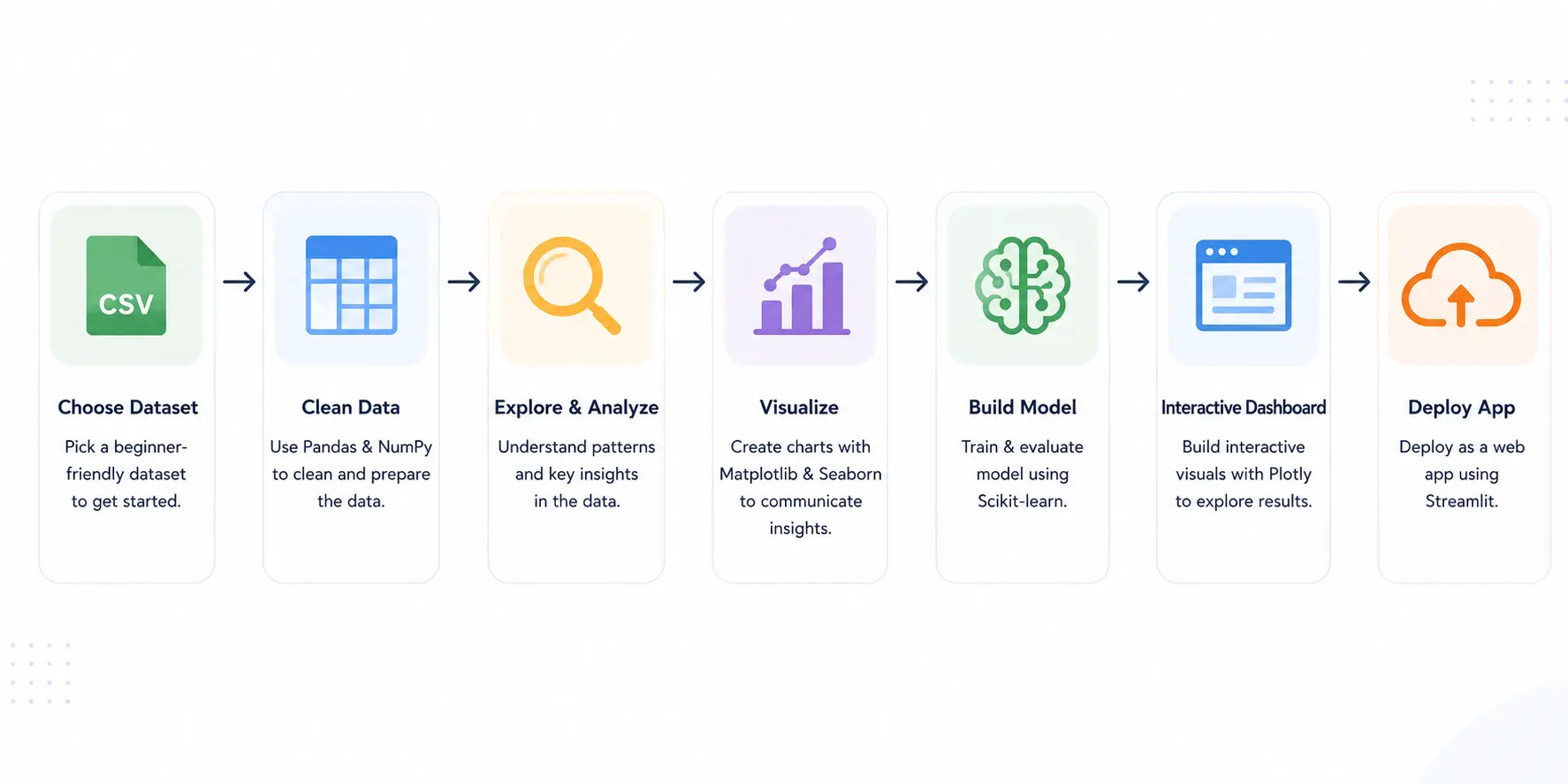
Choose a beginner-friendly dataset.
Start with something familiar, like student performance records, Netflix's movie catalog, or a small sales dataset. Because you already understand the subject, it's easier to notice when something in the data looks wrong.
Clean and Explore the Data
Bring in Pandas and NumPy here. Load the dataset, check what is missing, and get a feel for what you are actually working with before touching a single chart or model.
Visualize Key Insights
That's where Matplotlib and Seaborn come in handy. If you use a few judiciously selected charts, patterns, trends, or abnormalities will become obvious sooner than you would find them scrolling through raw rows.
Build a Simple Prediction Model
Once you understand the data, Scikit-learn lets you take the next step, something like predicting a student's final grade based on hours studied. Keep the first model simple. The goal is understanding the workflow, not building something perfect.
Share Your Project
Finish with Streamlit and turn the project into a small web app anyone can try. This is the step that turns a tutorial exercise into a real portfolio piece, and it's exactly the kind of hands-on work that connects theory to something you can show a recruiter.
Common Mistakes to Avoid
A few habits quietly slow beginners down more than anything else:
Learning too many libraries at once
Ignoring Python fundamentals before jumping into data science tools
Watching tutorials without practicing on your own
Skipping real-world projects
Expecting quick results without consistent effort
Avoiding these will save you months of frustration. Progress in data science comes from steady, hands-on practice, not from watching endless tutorials back to back.
What's Next After Learning These Libraries?
Once the seven libraries feel comfortable, a few natural next steps will round out your skill set:
Learn SQL for database management
Understand basic statistics and probability
Explore Power BI or Tableau for business analytics
Build more projects and maintain a GitHub portfolio
Practice solving real-world datasets
Learn Data Science with Python at Saarathi Academy
If you'd rather learn through a structured program with mentor support, Saarathi Academy runs a hands-on data science and machine learning course out of Kathmandu, built around Python, SQL, and Power BI, with real mentors reviewing your code along the way.
Batches are capped at ten students, so feedback stays direct instead of getting buried in a forum thread somewhere. The curriculum stays grounded in real business use, the projects are genuine rather than simulated, and by the time you finish, you'll have a portfolio to show, a refreshed resume and LinkedIn profile, and a mock interview under your belt. Having a mentor at every stage makes learning data science with Python a lot less lonely.
Conclusion
Getting started with data science with Python doesn't have to be overwhelming. Instead of trying to learn dozens of libraries at once, focus on mastering the essential tools that form the foundation of every data science project. Libraries like NumPy, Pandas, Matplotlib, Seaborn, Scikit-learn, Plotly, and Streamlit will help you clean data, uncover insights, build machine learning models, and present your work with confidence.
To succeed in Data Science with Python, focus less on learning more libraries and more on applying your knowledge through practical, real-world projects.
Whether you're learning Python for data science to start a new career, upskill for your current role, or work on personal projects, building a strong foundation with these core libraries will set you on the right path. Stay curious, keep practicing, and remember that every expert data scientist started with the same first steps you're taking today.
Ready to Build Real Data Science Skills?
Learn Python, SQL, Power BI, machine learning, and analytics through hands-on projects, mentor guidance, and a structured learning path designed for beginners and aspiring data professionals.
Frequently Asked Questions
What is Data Science with Python?
It is the practice of using Python and its libraries, such as Pandas, NumPy, and Scikit-learn, to collect, clean, analyze, and build predictive models from data.
Which Python library should I learn first?
Start with NumPy, followed by Pandas. These two form the foundation for almost everything else in data science.
Can beginners learn data science with Python?
Yes. Python was designed to be beginner-friendly, and with a structured learning path, anyone can start building real data projects within a few months.
Which projects should I build first?
Start with simple, familiar datasets like sales records, movie ratings, or student performance data before moving to more complex projects.


